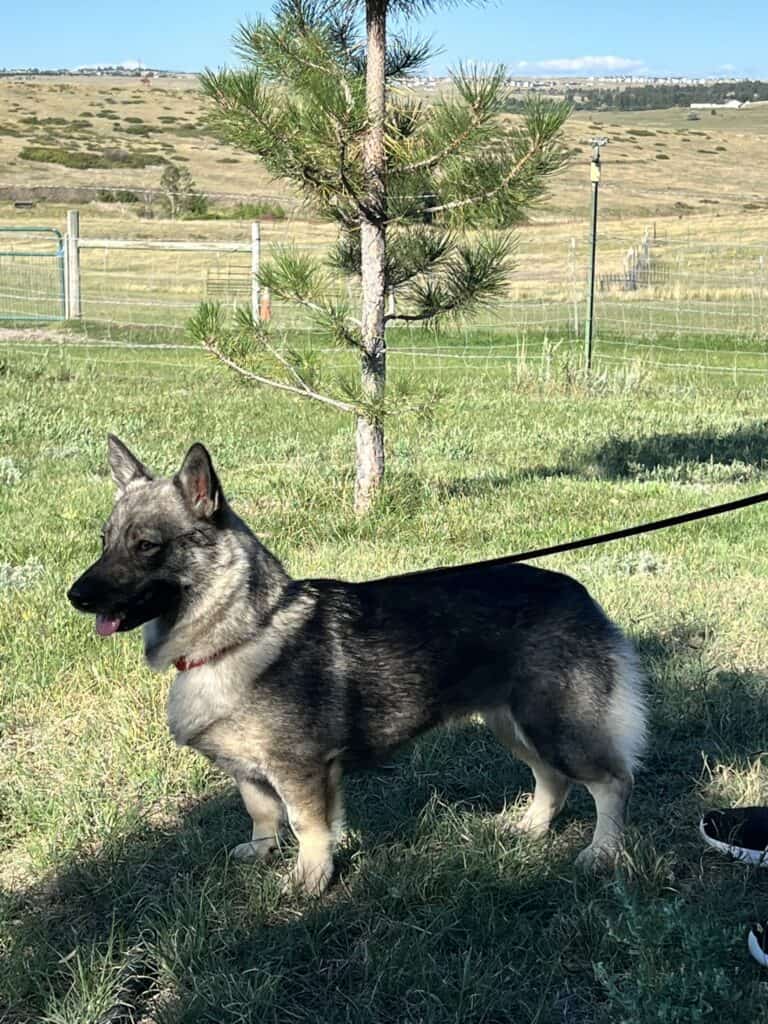
I am driving a rented passenger van. It’s a first. There are three humans and five dogs. The family is here from Texas; two of Jolene’s sisters, along with mom and dad. They came up for the Swedish Vallhund Nationals. Jolene and I are going because they are. She doesn’t have all the letters they do, but it’s not like you have to qualify. Pony up the entry fees and you’re in.
Any horsewoman who has seen the movie Best in Show knows that the dog world and the horse world are pretty much identical. It takes all kinds. The very best people you could hope to meet and a few real stinkers. No one loses points for general weirdness. I mean, individuality.
The nationals take several days, but it starts with herding. This is Jolene’s third herding trial, and we are competing on a pass/fail level, so don’t expect any big tearful ribbon ceremonies. For once, we are not the smallest breed here. It’s great to see so many of us. There were some famous dogs and some dogs who work on the farm every day. I wonder if herding is the Man from Snowy River contingent of the dog show world. I hope so.
Jolene and I need to qualify in two goes under two judges. In this test, we enter a pen with three sheep. We move away from the gate, Jolene sits, and I take her leash off. I ask her to wait, step a few strides away, and then we demonstrate a pause. We do this in our warm-up. Like horses, it’s too late to train at a trial, but the perfect time to look in each other’s eyes. Besides, I have to prepare early because being late makes my hearing loss worse.
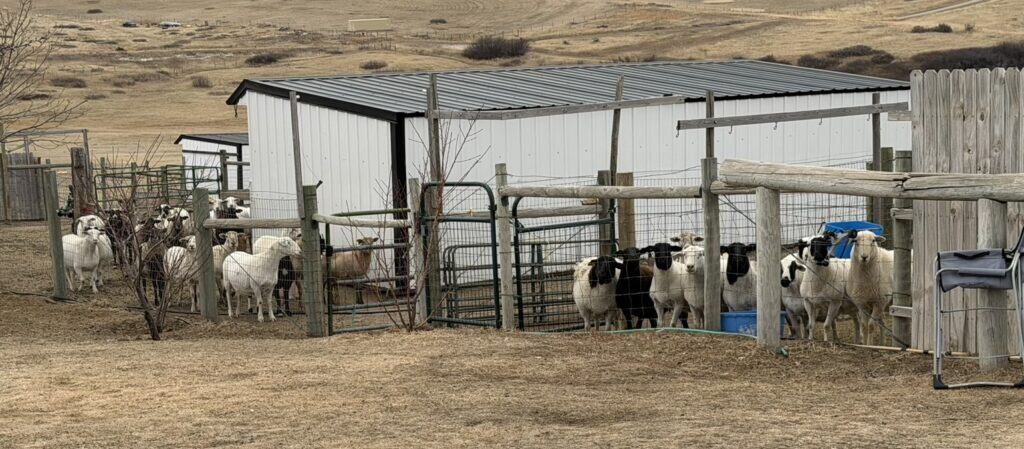
Finally, I say, Let’s get ’em, and we move the sheep quietly around cones with two changes of direction. At the end, I ask Jolene to stop and recall. The sweetest moment is watching Jolene stride back. My heart swells every time.
Who knew that herding was so like dressage? There is a pattern to accomplish. The first requirement is forward movement, but relaxed to protect the livestock. There is an art to keeping the sheep as you turn toward the draw. Meaning sheep know where the exit is, so corners need negotiation, and moving one direction is trickier than the other. The sheep tell you how your dog is doing, so you listen to both. It’s about focusing with every sense, planning, and preparing to be the most helpful for the dog or, at the very least, not in her way.
I’ve had dressage tests come apart so badly that a herd of sheep running through would have been an improvement. But looking back, it was dressage that gave me the ability to do everything since then. Including traveling to give clinics and writing. The most important thing dressage (horses) taught me was to control my emotions and stay patient. You’re welcome.
Between runs, we did some volunteering. Jolene and I directed some traffic and delivered paperwork. The day was long and hot, and our feet were out of sorts. We weren’t done until 1:30 in the afternoon. Just like a horse show, we couldn’t believe it wasn’t dark yet.
The most challenging part for me was straining to hear what was going on around me and not being able to tell whose dog was barking. They all sound like Jolene. Both judges wore my remote mic, so I did hear their positive comments. Jolene qualified twice and got her Herding Tested title.
I have missed being a fanatic. Those years taking lessons and practicing. Going to shows for the weekend, nothing but horse time. It’s so fun to be a beginner at something. Jolene says, don’t get too comfortable.
The hardest part of the day for Jolene was the end, when the day’s titles and awards are handed out. The crowd was small but enthusiastic. Cheers for a well-planned day, great stock, and wonderful judges. One judge talked about how important it was that dogs be able to do the things they were bred to do, rather than sublimate their instincts to get along. Lots of cheering after that. Jolene got nervous at the noise and pulled back on her leash.
I took stock of Jolene. If she was on her last straw, we would’ve both gone back and waited at the van. Friends can bring ribbons. But if she had a little more in her, this was the biggest training opportunity of the day. More challenging than sheep.
So I breathed and used my body position. I know that I can’t control Jolene any more than I can control a bolting horse. But I can be her safe place. We were standing at the back, and she had room to move. She said, can we please go now. I said yes, in a minute. She continued to move but was processing now. Moving is a calming signal, a resolution for anxiety. About that time, a stranger bent over her and stroked her, looking at me critically. Jolene got scared again. I continued breathing and not escalating. Giving her time. Someone else suggested I pick her up.
So, I picked her up, which was like holding a charging warthog. Like asking a hysterical horse to stand flat. This was my failure. I knew better, but peer pressure still works so long past high school. I was either gonna get my throat slit by Jolene’s toenails or remember who we were and how we train. We went back to our methods.
The judge, still speaking, only singled out one dog, but she talked about that dog at length. I know what you’re thinking, but it was someone even better. It was Jolene’s mother, Dash of Panache, but she’d rather you call her Penny. She’s the dog that made me want a Vallhund. The judge explained that in her first test, Penny watched the sheep and they watched her. Moving with quiet intensity, rather than running like a barking headless chicken. (My words, not the judge’s.) First trials can be chaotic, but the judge thought Penny was special, praising her for doing things I thought I’d recognized during her go. My eye might be learning this crazy sheep job, too.
Jolene just needed a few moments of breathing and moving. Having a dressage lesson. The loud cheering continued, but Jolene calmed herself. Stress is a constant, but it isn’t always bad. Confidence can come from working through stress. Jolene didn’t want to be coddled; she needed time to think. Besides, Jolene is right. People are the scary thing.
Recognizing calming signals is just the first step in communicating. Granted, the listening part is the most important. But then comes the question of how to respond. That’s where understanding how animals think comes in. It’s using that awareness while answering in their language. It’s not enough to train the maneuvers if the process tries to stifle their emotions. Says any rescue dog or horse.
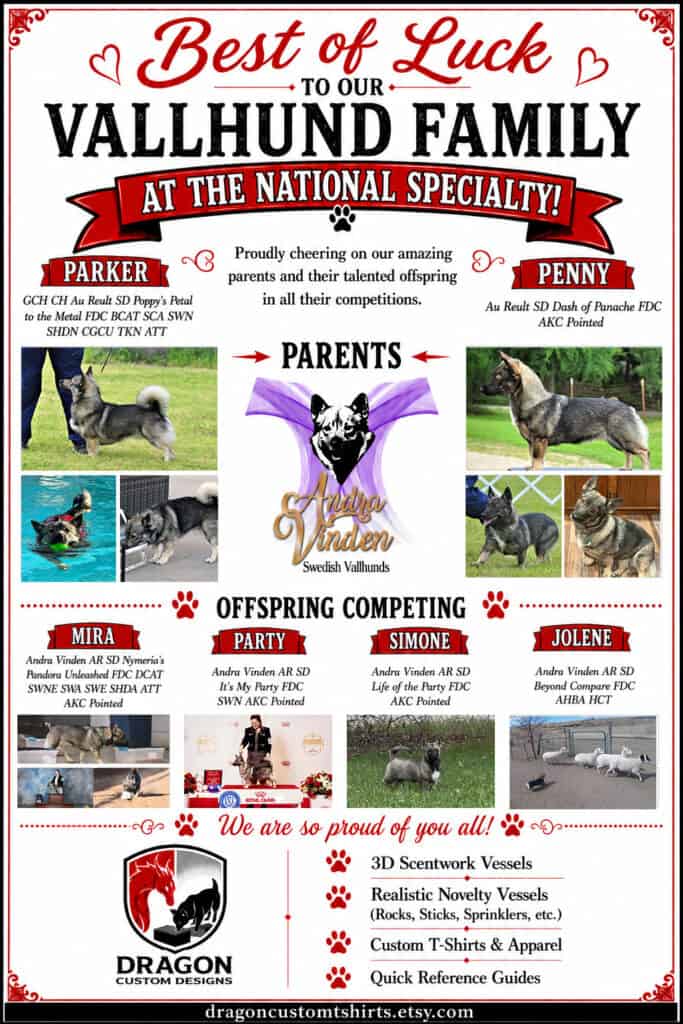
Mira and Party, our sisters, and the parental peas, all titled at their levels. We collected our ribbons and drove home. The family left for Greeley to set up for the rest of nationals. We’ll go tomorrow.
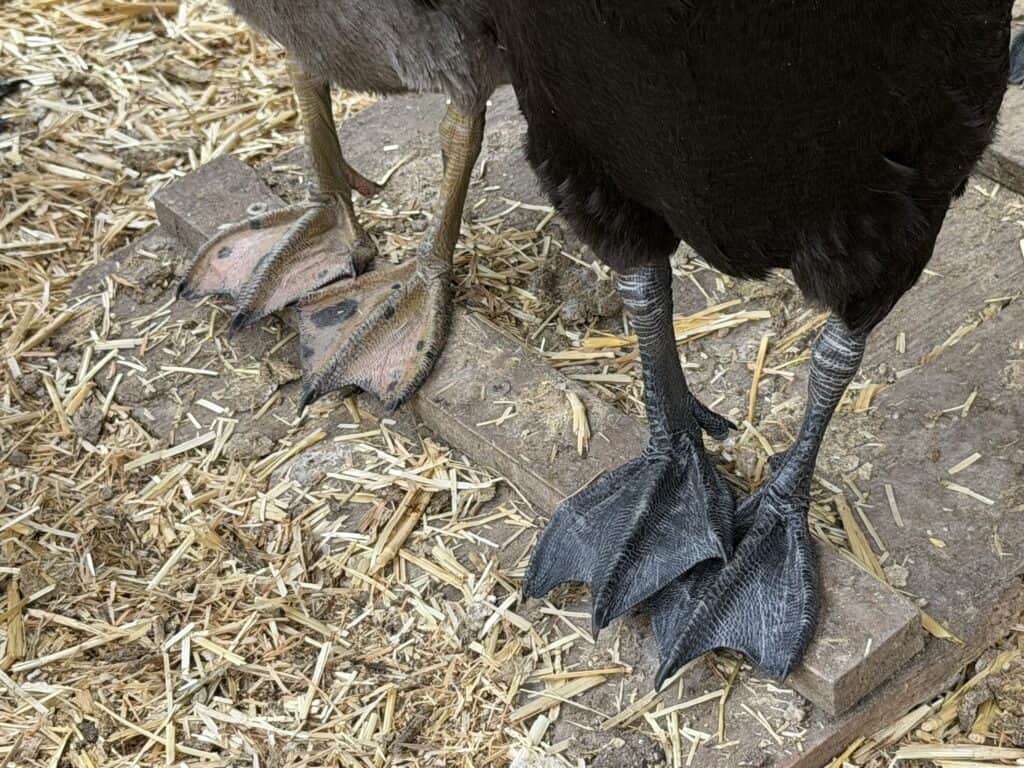
I fed the horses, brought the sheep in, changed the duck water, and thought about my little wolf and how sheep show her more respect than people. We humans really do need to work on ourselves.
Then Jolene and I spent a long time telling Mister, our sweet old-man-of-a-dog, how the day went. Meaning Jolene snuggled close while I spent a lot of time rubbing his belly and telling him stories about how we missed him. We thanked him for guarding the farm while we were gone. He does this while meditating in the house out of the sun.
Why do we take our animals to competitions like dressage or herding? Is it just the thrill of heat exhaustion, getting sweaty and dirty, along with spending a small fortune for travel and entries? All for a ribbon that inevitably falls between the seats in the truck? The reason competition is fun is just that stress. To prove that we have each other’s back no matter the environment. That we don’t have any imaginary love affair. Like the best dressage horse, we are closer than kin. Closer than skin.
Jolene says, our pronouns are we/us.
…
An audio version of this essay is available to subscribers who receive two podcasts a week on Substack.
Find Anna Blake and The Gray Mare Podcast on Substack(opens in new tab) or BlueSky social media. Contact me directly at annablake.com(opens in new tab). #deletefacebook
My books include three creative nonfiction books, two memoirs, and two poetry books. Available at all online booksellers, Amazon, Barnes and Noble, and signed copies from me. Please consider leaving a rating or review.
Join us at The Barn School,(opens in new tab) our social and equine educational site, with member sharing and our infamous Happy Hour. Everyone’s welcome. For specific horse training advice, search 1500 essays archived on my website. Want more? Become a sustaining member, a “Barnie.(opens in new tab)” Subscribe to our online group and join the best bunch of like-minded horse people anywhere.
Ride for a new brand. Find our Relaxed & Forward and Undomesticated Women swag at Zazzle.
Women Aging Cantankerously

💗I have enjoyed your books and essays over the years. I don’t know where you find the words. Thank you, Kate.
Thanks, Kathleen. Animals inspire me.
We/Us, is what we all aspire to be! Bravo, Anna, Jolene, and the whole Family. I can’t wait to hear how the rest of the specialty goes for everyone.
Thanks, Peggy. It’s great to see so many of “us”.
Jolene’s first run brought tears to my eyes. I was so proud of team Jolene and the joy on your face was truly priceless.
Thank you, my friend. And Mira is no slouch. These girls of ours are so special.
Oh marvellous- for all of you👏👏👏
Thanks, Annie. So much fun.
We/us is the way all of us would like to be WITH our animals – all of them. Sounds like you and Jolene (AND Mister) have certainly accomplished that.
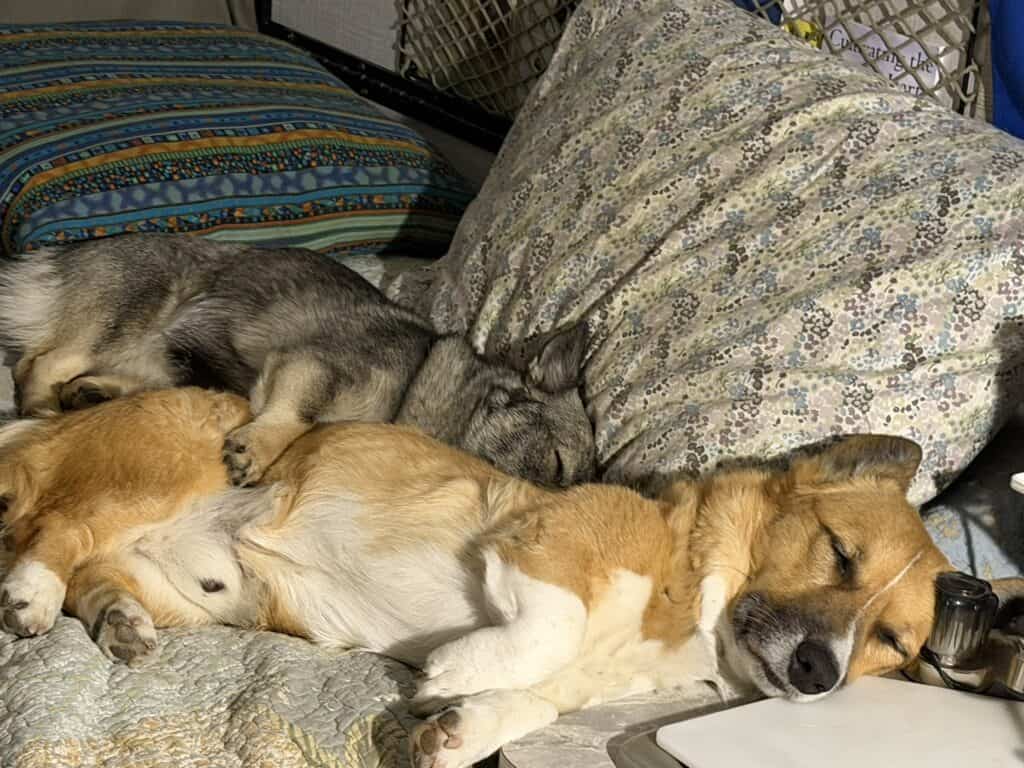
I imagine the sacked out picture of both of them was at the end of that day.
Thanks, Maggie. That is how the day ends around here. Dogpile!
Thanks for this. Sometimes I’ve had a hard time reconciling what you’ve written about affirmative training with showing, but this essay cleared a lot of that up. I will keep listening to my mare; maybe someday with my continued help her emotions will stop overwhelming her and we might again step into a dressage arena. In the meantime, we will ride at home and on the trail. My terrier and I, on the other hand, will keep having fun in the agility ring.
Affirmative training was what I did when showing horses; lots of people do. The nasty trainers get more attention because affirmative training is quite boring to watch… Glad you are having fun in agility! Thanks, Michelle